
Medium-Term Management Plan artience 2027 | Integrated Report 2026Technology and Intellectual Property Strategy: Bringing the technical knowledge of the Group together to innovate and open the path to the next growth area
Published on June 30, 2026
This page has been translated using AI.
Continued scaling up of technology platforms
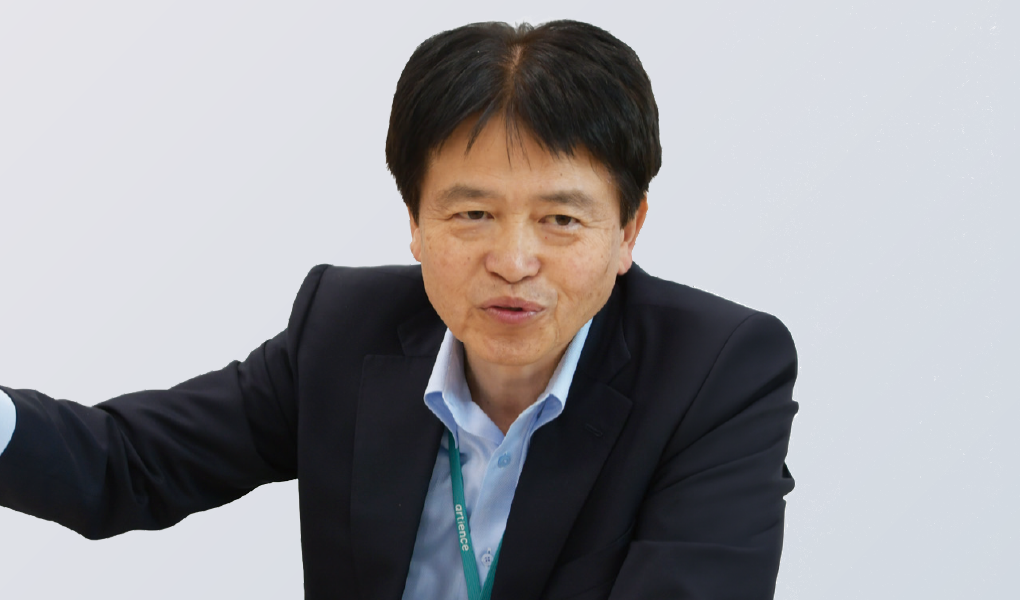
Toshinori Machida
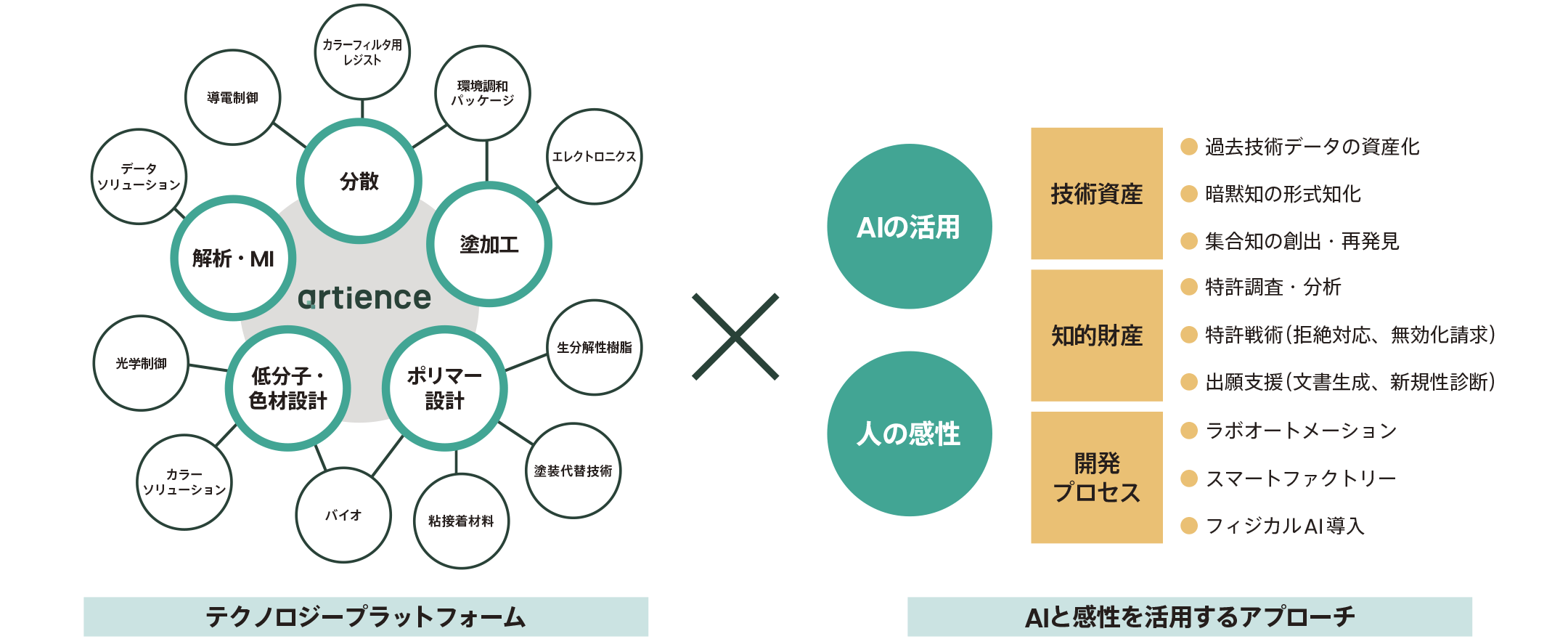
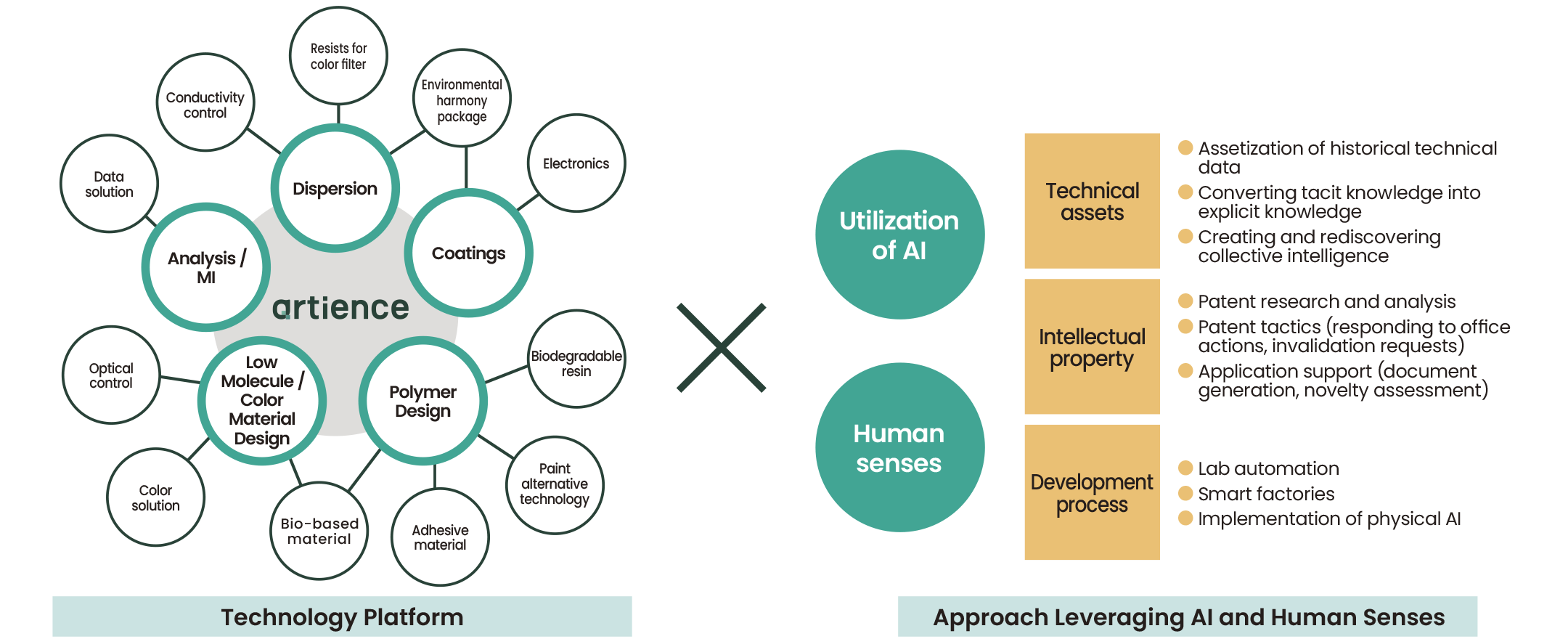
The artience Group's core polymer design, low molecule and colorant design, dispersion and coating technologies are at the heart of our technology strategies. We combine these technologies to create a wide variety of materials. Process technologies required for manufacturing and digital and analysis technologies to increase performance are also key elements of our strategies. Based on our technology platforms, we create value that we provide to society in the form of functions and applications. The greatest characteristic of our technology strategies is scalability. In other words, we combine multiple technologies to continually create new products and businesses.
The implementation of these strategies requires that we collaborate beyond the boundaries between our individual operating companies. The individual operating companies have their priorities and perspectives when making decisions. Even so, in technology development, it is necessary to use the Group's knowledge in a cross-organizational manner and, in some cases, to share human and other resources. The Group Development Strategy Committee plays a leadership role in this kind of collaboration. Since I became CTO, I have been increasing the functionality of the committee.
While individual operating companies are responsible for short- and medium-term development, the Group should handle development themes from a longer- term perspective. One example is the development of materials for UV curing inks that do not emit hazardous substances. This development project is being conducted at a base in Europe. In this area, there are currently no regulations. Taking early action in anticipation of future increasing safety needs may allow us to establish a new industry standard. The Group Development Strategy Committee will implement studies, and then we will work on development themes that operating companies by themselves would hesitate to implement.
Collaboration with external parties is also important. We value open innovation and actively participate in joint development projects with large companies based in Japan and start-ups in Japan and overseas. Our goal is to obtain ideas and technologies that are not an extension of our activities and use them to create new value.
|
Policy 1 |
Development of new products, technologies, and production technologies for strategic priority businesses |
|---|---|
|
Policy 2 |
Expansion through new product and business development overseas |
|
Policy 3 |
Taking on challenges in new R&D methods |
- Transforming R&D methods through the combination of technology platforms, generative AI, MI, and computational chemistry
- Further expansion of open innovation
- Utilization of strategic IP assets in business
Active use of AI and big data to transform our development process
We are currently focusing in particular on the transformation of our development process using generative AI. We have incorporated a huge amount of technology data that we have accumulated over the past two decades into a closed generative AI tool and built an environment which enables people throughout the Group to use it. We launched its operation in FY2025. The AI is now capable of providing answers comparable to those of highly experienced engineers when asked, for example, questions about methods for improving the heat resistance of pressure sensitive adhesives.
This initiative is leading to the creation of a collective intelligence that transcends the boundaries between businesses. There are now some examples of people using AI tools to incorporate technologies and knowledge from other businesses in their efforts when they face difficulties in the development process, helping them create new solutions beyond what they could imagine. In the future, we will combine technology data and marketing data to discover applications for technologies that we were unaware of and cultivate new markets and customers.
The advancement of production technologies with a view toward the transformation of factories into smart factories is another key initiative. In Japan, the population is decreasing. Securing a workforce engaged in practical operations is a major issue. It is necessary to shift to a structure that is not dependent on labor. At the Kawagoe Factory and other sites, we have already operationalized model facilities for automation and labor-saving are already operational. The knowledge obtained in these places will be shared with all of our global operations.
In terms of research and development, we will further accelerate lab automation. If nightly examinations are conducted automatically using AI and robots, researchers will be able to concentrate on analyses and the creation of hypotheses from the following morning. We will clearly divide the roles of humans and AI to improve development efficiency and quality while reducing the workload borne by humans.
Amid the increasing importance of intellectual property, we have shifted to a strategy in which we look at development and intellectual property in an integrated manner. In a situation in which we are competing based on the performance and cost of products, competitive advantage depends largely on possessing strong patents. We will not only protect our own technologies. We will also analyze the development trends of competitors and strive to obtain patents at an early stage in areas where competition is expected in the future. Using AI will be a key to intellectual property activities. We have already introduced AI tools and are actively use them in patent surveys and the creation of application documents and responses to competitors' patents.
To create future value based on human senses using past data accumulated by AI
My duties as CTO are to gather the technological assets scattered across the Group's individual companies so they can be used by the Group as a whole and to encourage people to take on challenges in areas that will lead to the creation of strategic priority businesses, which are not an extension of each business. Development activities do not produce tangible results in a short period of time. They are built on countless instances of trial and error. Accordingly, we will identify the areas in which we can be successful based on artience's unique core technologies and use our management resources, including human, physical, and financial capital, in these areas. Another of the tasks I have to complete is envisioning the growth pillars of the next medium-term management plan and farther into the future and to transform this vision into tangible technologies and product development.
As the change of the social environment accelerates, a series of issues that are the result of these changes arise. For example, the widespread use of generative AI leads to higher-performance devices. At the same time, controlling power consumption and heat generation is emerging as a new technological challenge. It is important to not only meet immediate needs but also propose solutions in anticipation of issues that will arise in the future.
The roles that humans play are even more important in these circumstances. An area in which AI is strong is in the organization of historical data and facts, but humans create new ideas. Science is accumulation of historical achievements, but the human senses facilitate discoveries and enable us to leap toward the future. They will be the next source of our competitiveness. We will combine the full strength of the Group and continue to innovate with the goal of creating value that resonates with the senses.
Fusion of technology platforms with approaches to technology and intellectual property
Share


