
Business/Products
artience group
artience and DIC Establish Industry-First Common Protocol for Evaluating Film Packaging Recyclability in Japan
Standardizing deinking and debonding evaluation to advance circular economy across Japan’s supply chain
This website uses automated machine translation. Please note that translations may not be fully accurate and may differ from the original Japanese text.
artience group TOYO INK CO., LTD. (President and Representative Director Hideki Yasuda, Chuo-ku, Tokyo, hereinafter "artience group") and DIC Corporation (President and Representative Director Operating Officers Takashi Ikeda, Chuo-ku, Tokyo, hereinafter "DIC") have established the industry's first "Industry Common Protocol" that standardizes testing procedures, evaluation criteria, and reporting formats to evaluate deinking and peelability in material recycling of film packaging (flexible packaging) using common standards. Through this protocol, an environment will be established where all stakeholders in the domestic supply chain—including converters, brand owners, and recyclers—can evaluate and compare recycling suitability based on common standards, promoting the establishment of a common foundation for recycling suitability assessment in the flexible packaging sector. Both companies will contribute to expanding the circular use of flexible packaging and realizing a circular economy.
Background
In recent years, against the backdrop of fluctuations in resource prices and rising geopolitical risks, the Japanese government has promoted the circular economy as part of its growth strategy, highlighting the growing importance of reusing used plastics as resources. In the container and packaging sector, there is a growing demand for product design that is easy to recycle and the expansion of high-quality recycled plastics.
Flexible packaging, used in a wide range of fields such as food, daily necessities, and pharmaceuticals, offers excellent functions such as protecting contents, reducing weight, and improving transportation efficiency. However, to achieve different functions for each application, it is made from multiple materials such as film, printing inks, and laminating adhesives. To recycle such flexible packaging as high-quality recycled plastic after use, the process of "deinking," which removes printed ink, and "de-stripping," which separates overlapping films, are important. However, until now, each company has conducted evaluation of deinking and peelability using its own testing conditions and criteria, making it difficult to compare results across different companies and materials. Additionally, evaluation items and reporting formats have not been standardized, which has been a challenge in examining recyclability during the packaging design stage and promoting information sharing among stakeholders. These issues are difficult to solve by individual companies alone, and it is necessary to establish an evaluation platform that can be utilized across the entire supply chain.
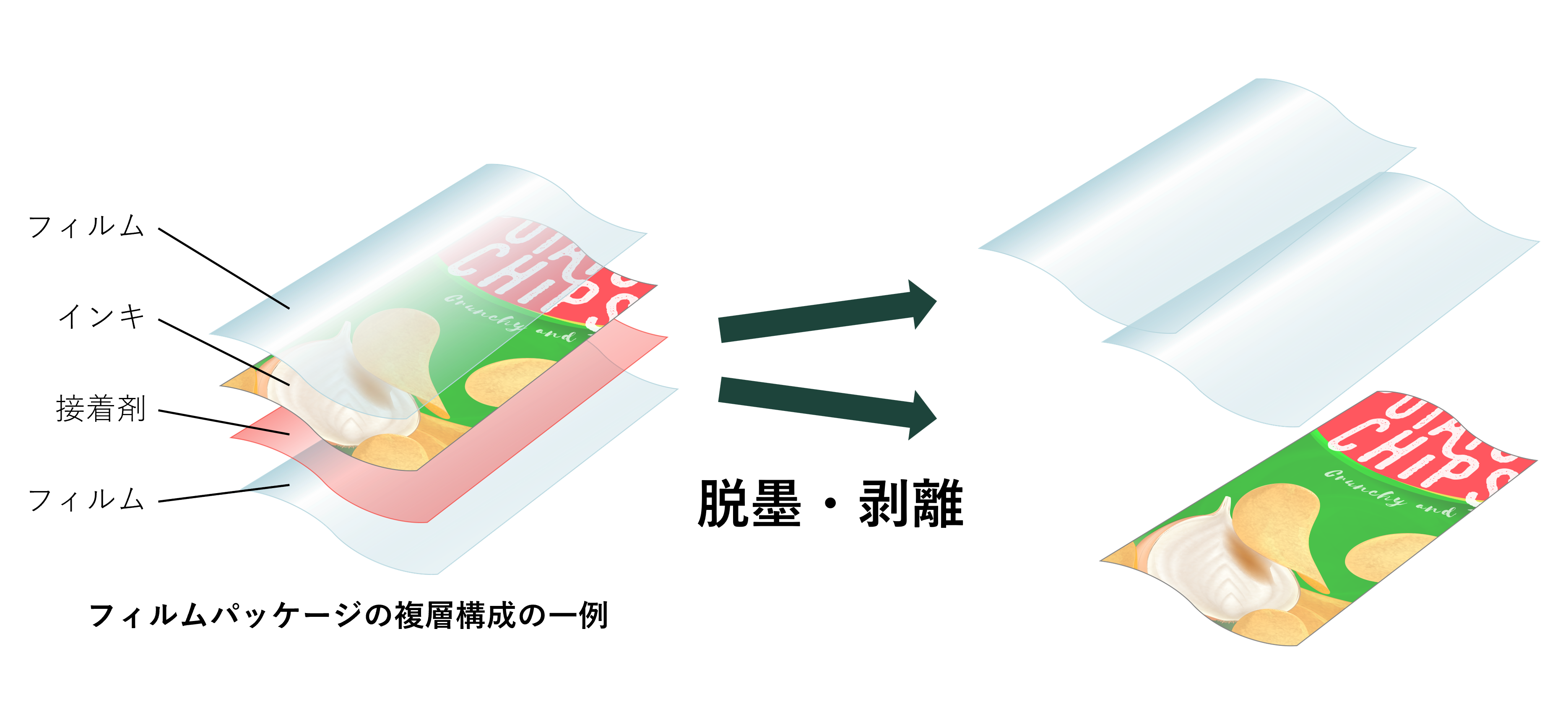
Contents of the Common Industry Protocol
This protocol was formulated by artience group and DIC, as leading companies in the printing inks industry, to address the common challenge of promoting resource circulation. They collaborated beyond the framework of competition and pooled their expertise in printing inks, laminating adhesives, and recycling technologies. This protocol is designed to evaluate deinking and peelability in material recycling of flexible packaging using common criteria and consists of the following three elements.
- Examination procedure
Clarify the equipment used, test conditions, material handling, and operating procedures to improve test reproducibility. - Evaluation Criteria
We establish criteria to evaluate the deinking and peeling status as well as the quality of the obtained recycled plastic, enabling objective evaluation. - Report format
Exam conditions and results are organized in a unified format, enabling smooth information sharing and comparison of results among stakeholders.
By utilizing this protocol, it becomes possible to evaluate deinking and peelability using common standards even for different companies and materials, and compare the results. This is expected to provide the following benefits to all stakeholders in the supply chain:
- Converter (manufacturer responsible for printing and processing packaging materials): This makes it easier to select printing and processing conditions and materials that consider recyclability.
- Brand owners (manufacturers of food and daily necessities): It becomes easier to select packaging materials with high recyclability based on objective data.
- Recyclers (Recycling Businesses): Enables the setting of appropriate treatment conditions according to material properties and helps improve the quality of recycled plastics.
Future prospects
artience group and DIC will continuously reflect insights gained from actual packaging materials and recycling processes to enhance the accuracy and practicality of this protocol, while promoting the creation of a system that enables discussions and evaluation of recyclability throughout the entire supply chain—from product design through manufacturing, collection, and recycling.
Both companies are calling on a wide range of stakeholders across the domestic supply chain—including converters, brand owners, and recyclers—to expand the use of this protocol, aiming to establish it as a common foundation for recycling suitability assessments in the flexible packaging sector, and to expand cross-industry initiatives related to circular use of flexible packaging.
Exhibition schedule
Initiatives related to this protocol will be showcased at the booths of artience group and DIC at "TOKYO PACK 2026," held at Tokyo Big Sight from Wednesday, October 14 ~ Friday, October 16, 2026. This time, artience group will exhibit solutions that promote resource circulation through colorful packaging from two perspectives: "ReLoop ™ ~Drawing the Future with Surrounding Materials~," aiming to realize a sustainable society through two perspectives: "Sustainable Solution" and "Color Innovation."
We introduce our exhibits on the TOKYO PACK special page on our website. From Wednesday, October 14, detailed materials on the exhibited products will also be available, so please make use of them.
Exhibition Overview
|
Dates |
October 14, 2026 (Wed) ~ 16 (Fri), 2026, 10:00~17:00 |
|---|---|
|
Location |
Tokyo Big Sight (Koto-ku, Tokyo) East Hall |
|
booth number |
East Hall 2, 2N10 |
|
Official Website |
https://www.tokyo-pack.jphttps://www.tokyo-pack.jp/event/13994 |
###
Contact information regarding this matter
TOYO INK CO., LTD.
Sustainable Packaging Department
TEL: +81-3-3272-7693
Press inquiries
artience Co., Ltd.
Corporate Communication Department
TEL: +81-3-3272-5720
MAIL: info@artiencegroup.com
Tokyo, Japan, October 7, 2026 —The artience Group, through its packaging solutions subsidiary Toyo Ink Co., Ltd., and DIC Corporation today announced the development of the industry’s first "common industry protocol" to standardize test procedures, evaluation criteria, and reporting formats for deinking and debonding in the material recycling of flexible film packaging within the Japanese market. This protocol establishes a unified environment where stakeholders across the supply chain—including converters, brand owners, and recyclers—can evaluate and compare recyclability based on shared, domestic standards. By creating this common foundation, both companies aim to accelerate the circular use of flexible packaging and contribute to the realization of a circular economy.
Background
In recent years, the importance of repurposing used plastics as resources has intensified due to fluctuating resource prices and rising geopolitical risks, with the Japanese government positioning the circular economy as a key growth strategy. Within the packaging sector, there is a mounting demand for product designs that facilitate easier recycling and for the expanded use of high-quality recycled plastics.
Flexible packaging, used extensively in food, daily necessities, and pharmaceuticals, provides superior functionality for content protection, weight reduction, and transport efficiency. However, because it is composed of multiple materials—such as films, printing inks, and laminating adhesives—the processes of deinking (removing printed ink) and debonding (separating layered films) are critical for high-quality material recycling. Previously, these evaluations in Japan were conducted using proprietary test conditions and criteria, making it difficult to compare results across different companies or materials. This lack of standardization hindered recyclability assessment during the design phase and complicated information sharing across the local supply chain.
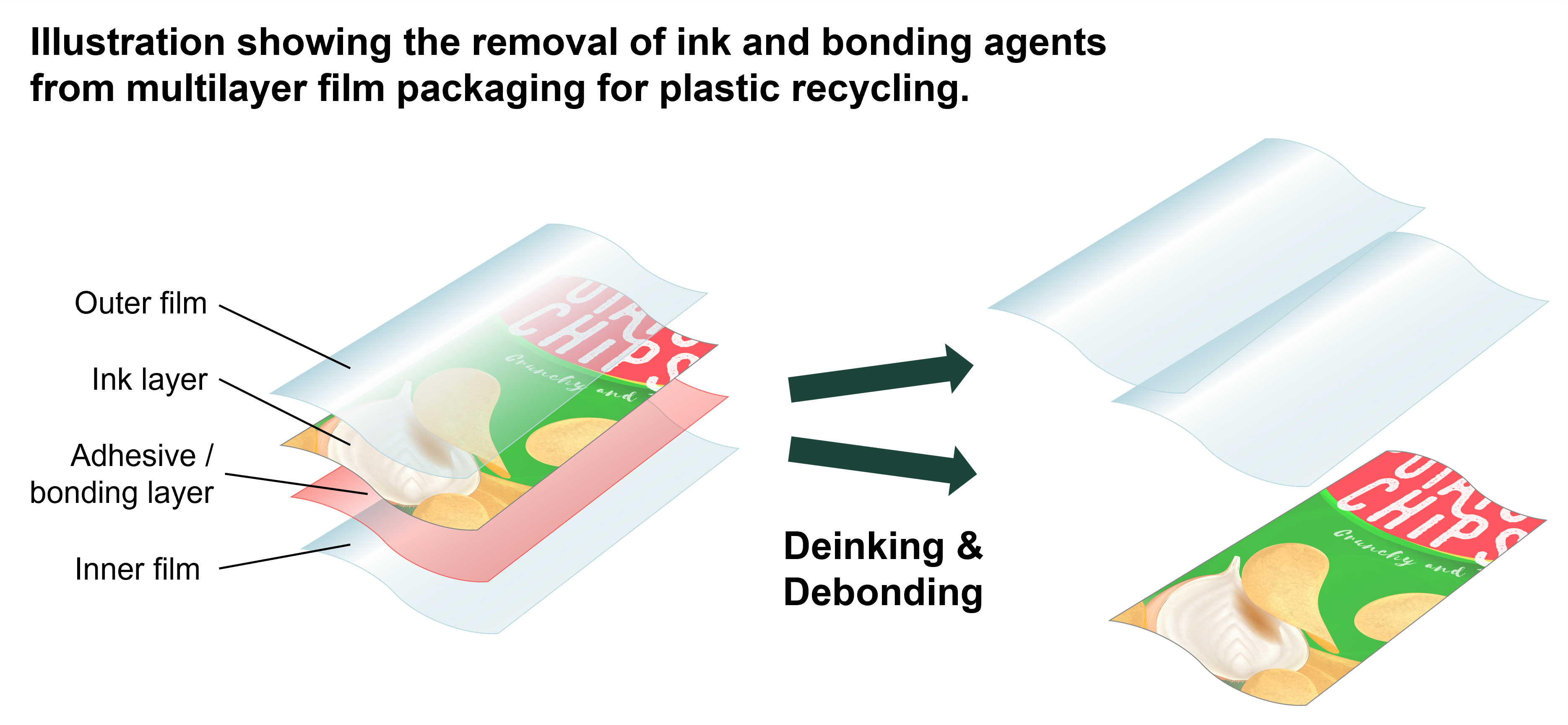
Overview of the Industry Protocol
Developed jointly by the artience Group and DIC—leading printing ink manufacturers—this protocol break down competitive boundaries to address Japan's unique recycling infrastructure needs. By pooling expertise in printing inks, laminating adhesives, and recycling technologies, the companies have established a standard consisting of three core elements:
- Test Procedures:
Clarifies equipment, test conditions, material handling, and operational steps to enhance reproducibility within Japanese testing environments. - Evaluation Criteria:
Sets objective standards for assessing deinking/debonding efficiency and the resulting quality of recycled plastic. - Reporting Format:
Standardizes test conditions and results into a unified format, facilitating smooth information exchange among domestic stakeholders.
The adoption of this protocol offers significant benefits to the Japanese supply chain:
- Converters: Streamlines the selection of printing/processing conditions and materials that prioritize recyclability.
- Brand Owners: Enables the selection of highly recyclable packaging materials based on objective, reliable data.
- Recyclers: Allows for the setting of appropriate processing conditions based on material characteristics, leading to improved recycled plastic quality.
Future Outlook
The artience Group and DIC will continue to refine the accuracy and practicality of this protocol by incorporating insights from actual packaging materials and recycling processes in the Japanese market. They are committed to promoting a framework where recyclability can be discussed and evaluated across the entire domestic supply chain, from design and manufacturing to collection and recycling. Both companies invite industry stakeholders in Japan to adopt this protocol, aiming to establish it as the standard for recyclability assessment in the flexible packaging sector.
Industry Launch at TOKYO PACK 2026
The two firms will showcase the new Protocol at their respective booths during TOKYO PACK 2026, held at the Tokyo Big Sight (Japan) from October 14 to 16, 2026. Under the concept of "ReLoop ™— Drawing the Future with Circulating Materials," the Toyo Ink (artience Group) booth (East Hall 2, Booth 2N10) will showcase solutions that promote resource circulation for vibrant packaging through two perspectives: "Sustainable Solutions" and "Color Innovation."
About artience
Founded in 1896, artience Co., Ltd. (TSE 4634; formerly Toyo Ink SC Holdings), the Japan-based parent company of the artience group, has long been providing innovative solutions that meet the needs of society by applying our core technologies of coatings, dispersions, polymer design, color materials design, and analysis and materials informatics. Today, artience is a diversified chemicals manufacturing group that delivers fine chemical products to a broad range of global industrial markets. With a network of roughly 8,000 employees in over 20 countries, we are continually working to solve the challenges that faces society, with the ultimate aim of building a future where all people can live enriched lives. For more information on artience, visit https://www. artience group.com/en/.
Inquiries
TOYO INK CO., LTD.
Sustainable Packaging Department
Tel: +81-3-3272-7693 (Japan)
Press inquiries
artience Co., Ltd.
Corporate Communication Department
Tel: +81-3-3272-5720 (Japan)
Email: info@ artience group.com
Share


