
Integrated Report 2026 artience Strengths: Open Innovation
Published on June 30, 2026
This page has been translated using AI.
Incubation CANVAS TOKYO
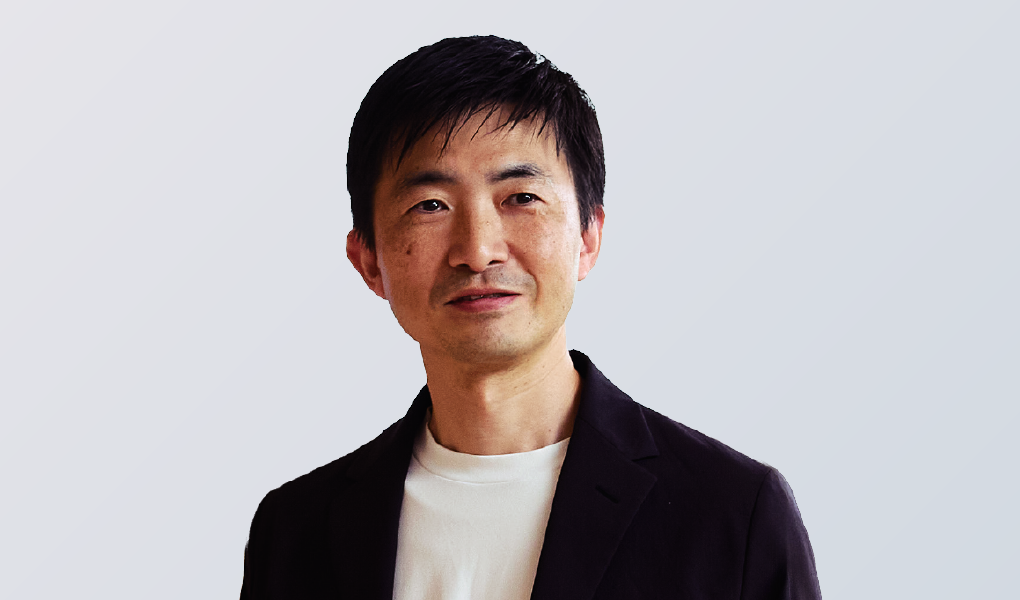
Hayato Takahashi
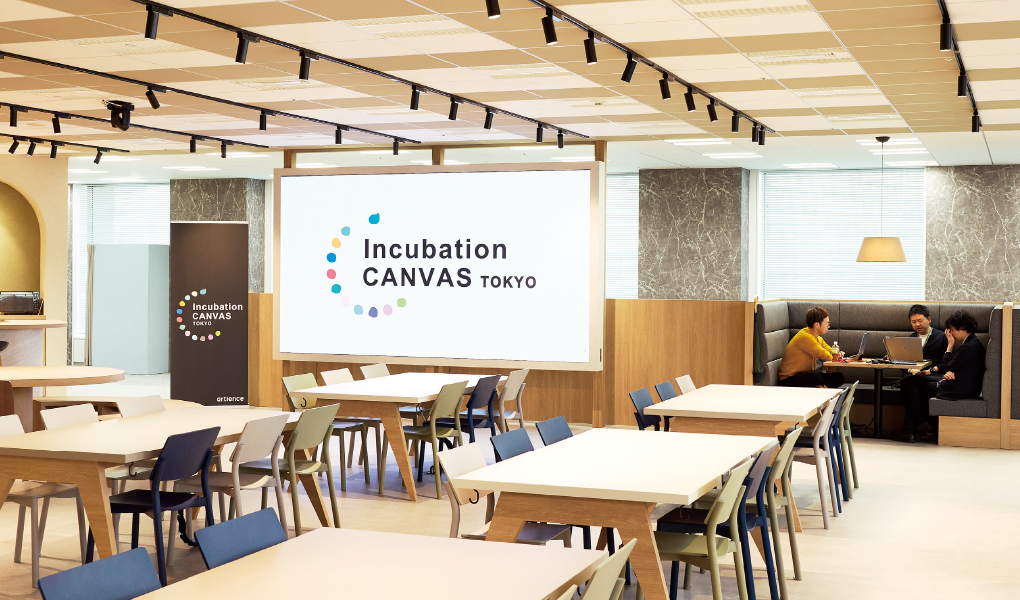
Incubation CANVAS TOKYO (ICT)'s opening in October 2025 was a major turning point for us. ICT was constructed as Japan's first innovation hub specializing in the field of materials. It was built inside the Kyobashi Edogrand facility in Tokyo, which houses the head office of artience Co., Ltd. It operates as a hub attracting various companies and organizations related to the materials industry to enhance co-creation and interaction. It supports the artience Group's open innovation activities.
Originally, we faced the challenge of expanding our co-creation activities with other companies and accelerating open innovation to create new businesses. I have taken part in a wide variety of matching pitch events. They provided few opportunities to meet anyone in the fields of materials and chemicals. I wondered if I could create these kinds of opportunities myself. This was the starting point.
The ICT logo has a wide variety of colors overlapping one another on a white canvas. A major objective is to create a place that makes everyone feel that this place in Tokyo, Japan, is a place where new technologies, information and people in the field of materials come together from all over the world and lead the global materials industry. I believe that this establishes a cycle that leads to the creation of new businesses and that it will have a positive effect on our creation of value.
Prior to ICT beginning to fully operate, it opened up space for free during a year-long preparation period to explore the direction it would take through some 300 different events. Currently, some 30 companies engaged in the areas of materials and chemistry are participating as members. Nearly half of them are business operators such as materials and chemicals manufacturers, and the remainder are start-ups. They include some foreign companies that have bases in Japan. ICT is increasingly used as a venue for product releases and regular events. There are approximately 25 partners, including academic institutions, venture capital companies and businesses that support innovation. They continually organize programs for research presentations, personnel development, startup sourcing and other purposes. The plan is to increase the number of ICT members to 100 to 200 companies in the future.
ICT's opening caused changes inside artience as well. We began to develop ideas about how our technologies should be used and a perspective on what we can do together with other companies that possess technologies that we do not. We are gradually considering collaborations with start-ups in greater depth.
We are currently in a stage of prioritizing the enhancement of ICT's functionality as a place for people to meet. Going forward, we will enrich accelerator and other programs in collaboration with partners and work intensively to achieve the social implementation of solutions. ICT's long-term role is to combine internal and external knowledge and technologies to more effectively meet the needs of the market.
Three years after the Incubation Center opened, we are now beginning to see its tangible effects in business, beyond just the opening of ICT. Semiconductor materials are one subject of a next-generation business. After generating a certain amount of sales, they were shifted from incubation in the center to being a companywide project. The life sciences domain is still in the incubation phase. Regarding biotechnology and drug development materials, we have narrowed the focus of our subjects for medium- and long-term projects and are making steady progress. The energy-saving solution that won the grand prize in the FY2024 IPPO business idea contest was commercialized and the FY2025 sales targets were achieved. It is now in the phase to expand the scale of the business.
The number of entries to the IPPO contest is increasing. They support the creation of new subjects of business. It is common for the number of entries to internal programs like this to go down each time the program is conducted. However, the number of entries to the IPPO contest increased sharply, from 114 in FY2024 to 204 in FY2025. At first, I imagined that many of the people entering the contest would be young employees in their twenties and thirties, but in fact, the program attracted people from all age groups, including those in their fifties and sixties. I was happy that my prediction was wrong. To further strengthen the culture of taking on challenges that has developed throughout the company, we began collaborating with the Human Resources Department in FY2026 to incorporate the development of an innovation-oriented mindset into training programs for employees at various levels.
The semiconductor materials business was created at the Incubation Center before it was transferred to a business unit. In the future, we will continue to increase the number of seeds of businesses like this. I think that it would be good if we were able to increase the number of seeds of businesses from various sources, including both the IPPO program for internal proposals and ICT. When these seeds of businesses sprout and grow into saplings that can be transplanted to business units or be spun off as new subsidiaries, the Incubation Center has achieved its goals.
Open innovation does not generate profit in the short term, but I am convinced that it will be a fundamental foundation for our continued growth ten and twenty years from now. The business units support our operations today, while the R&D department and the Incubation Center prepare for tomorrow. Open innovation is a part of these activities to prepare for tomorrow. By continuing to take on challenges and creating new businesses, the artience Group aims to be a global leader in the field of materials, and it aims to be admired by society. Accordingly, we will try many different things to create new businesses. The Incubation Center will be a starting point for our transformation so that our individual employees are proud to work for the company.

Mr. Takashi Hayashiguchi
Executive Officer, Director of Marketing & Incubation Division, Nippon Light Metal Holdings Co., Ltd.

Mr. Anis Uzzaman
Founder and CEO, Pegasus Tech Ventures
Visit Incubation CANVAS TOKYO's website
Share


