
Integrated Report 2026 artience Strengths: Business Development Based on Unique Core Technology
This website uses automated machine translation. Please note that translations may not be fully accurate and may differ from the original Japanese text.
Published on June 30, 2026
This page has been translated using AI.
Sustainable Packaging Division, TOYO INK CO., LTD.
Takumi Miyagawa
Market environment
In recent years, people's concerns about the issues related to plastic waste have been increasing around the world. It is said that 11 million of the 400-500 million tons of plastics produced annually around the world flow into the ocean.
Europe is ahead of the rest of the world in terms of the circular economy, and its Packaging and Packaging Waste Regulation (PPWR) is coming into force in August 2026. This regulation requires all packaging to be recyclable and the reduction of plastic packages. In Japan, the revised Act on the Promotion of Effective Utilization of Resources took effect in April 2026, comprehensively strengthening product design, manufacturing and recycling. The global plastic recycling market will absolutely continue to expand. Accordingly, I believe that being a leader in developing the recycling technologies the world needs will help increase our corporate value over the medium and long term.
Competitive advantage
Since around 2019, the artience Group has had a group-wide project, one that transcends the boundaries between Group companies, which is working to develop peeling and recycling technologies to recover and recycle plastics from used plastic packaging.
Years of research and development have resulted in gradual improvement in the performance of plastic film packages for food, pharmaceuticals and other products, known as flexible packaging. Films made of different materials and aluminum are laminated to achieve a range of performance benefits for different applications, such as the maintenance of freshness or the long-term preservation of products.
A drawback of multilayered packaging is its poor recyclability due to the difficulty of removing the adhesives used to laminate the multiple layers together and the inks used to print on the plastic packaging. Additionally, the residual inks in colored plastics after they are recovered and recycled cause quality issues. The number of applications for these plastics is limited. For a long time, the closed-loop recycling of plastics, where the recycled plastics are used as raw materials to make the same type of packaging, has been considered difficult.
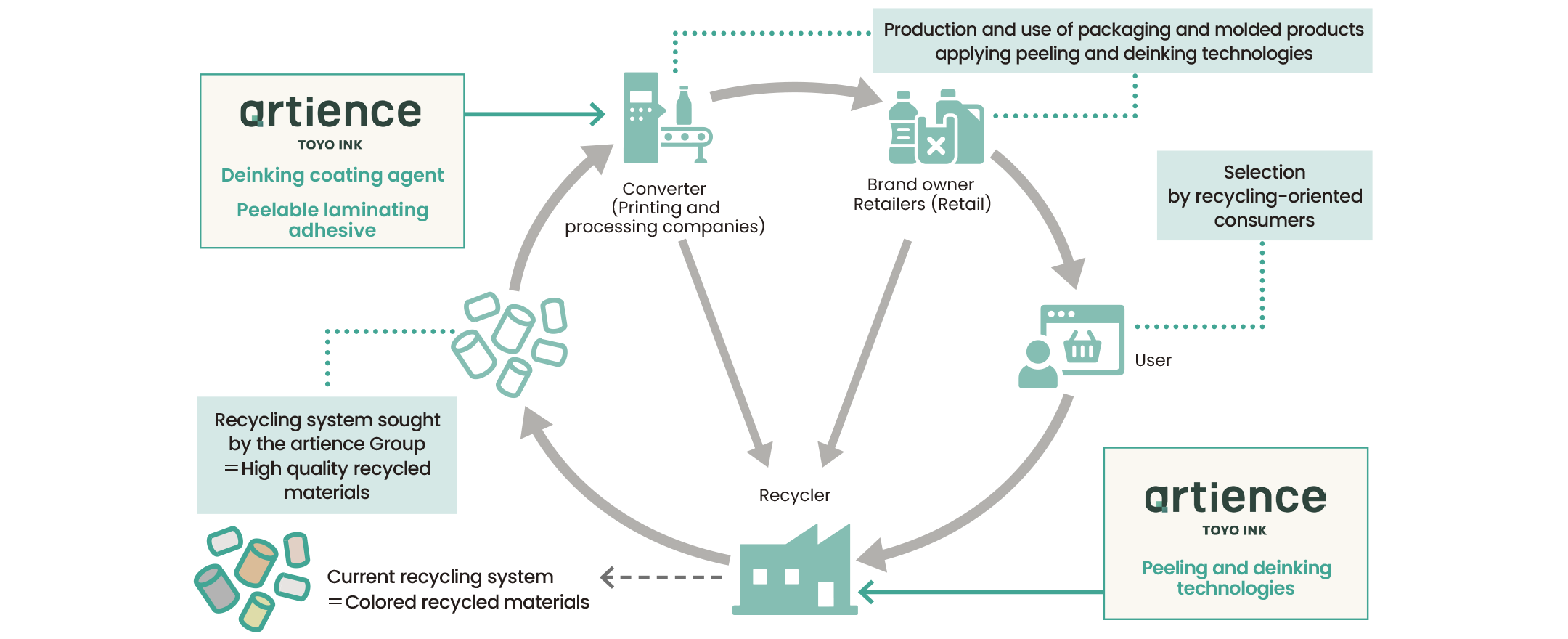
In this situation, the artience Group combined the cutting- edge technologies in resin synthesis, colorant synthesis and various other fields possessed by Group companies to independently develop advanced peeling and deinking technologies. These new technologies remove adhesives and inks from used packaging to facilitate the recovery of high-purity plastics. These technologies have opened the way to ensuring the high performance and recyclability of film packages.
In addition to its relationships with external partners that it has cultivated through the packaging materials business it has operated for many years, one of artience's strengths is that it independently owns a large lab plant where demonstration trials can be implemented. It is not possible for a single company alone to establish a circular economy. For society to implement these technologies, there must be a scheme that includes arterial and venous industries. In light of this, we have worked to expand co-creation with an awareness of how we can increase artience's presence in this scheme.
We cooperate with multiple brand owners and packaging materials manufacturers for verifications and improvements so that the plastics recycled using this technology are appropriate for their practical applications in terms of their quality, strength, cost and other factors. In close collaboration with multiple machinery manufacturers, we have jointly developed highly productive and efficient production equipment. Progress towards commercialization has quickly been achieved in our joint development project with Lion Corporation, one of the brand owners proactively involved in these initiatives. Lion decided to release detergent refill pouch products using the high-quality plastics recycled using our technology. As of May 2026, verification was underway with a view toward fullscale commercialization.
The closed-loop recycling of film packages now being possible is a major step toward the expansion of plastic recycling schemes. In the future, we will popularize peeling and deinking technologies broadly in collaboration with more stakeholders to support the closed-loop recycling trend.
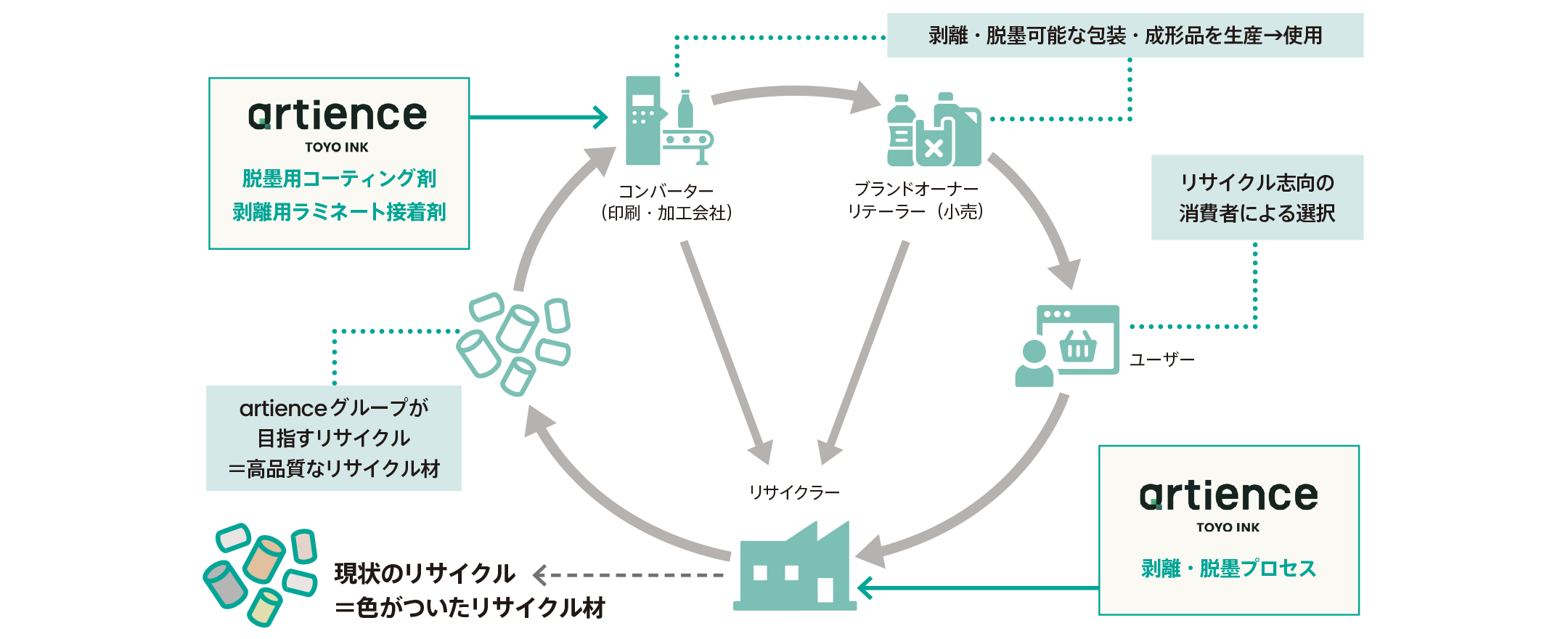
Plastic packaging resource circulation sought through peeling and deinking technologies
Long-term vision for the future
Plastic packaging used to be seen as the crystallization of the latest technologies, but it is also viewed negatively as a source of waste. When I was a junior gravure ink sales staff member, I was shocked to hear a customer say that the things that we produced would eventually be waste. Even so, I wanted to work positively with pride and to explore the future of the entire packaging industry. I then became a Certified Packaging Professional (CPP.*) I participate in a committee and gatherings of CPPs to discuss the ideal form of packaging 10-20 years from now.
As an employee of a company engaged in the plastics industry, I want to continue to improve the quality of plastic recycling. Used plastic packaging is no longer waste, but is a core resource that supports the circular economy. I want to create this new value and cause the paradigm of society as a whole to shift. To do this, I will transcend the boundaries between the different industries involved in this scheme and even collaborate with competitors to enlarge our circles of co-creation. In parallel, I will popularize the recently established scheme and idea as a concept for developing the technologies and business of the artience Group as a whole. The circular economy is an issue that will prompt a huge transformation in manufacturing. I am sure that this is the value the artience Group should provide in the future.
- Certified Packaging Professional (CPP): A private qualification established by the Japan Packaging Institute to certify highly qualified experts in packaging technology.
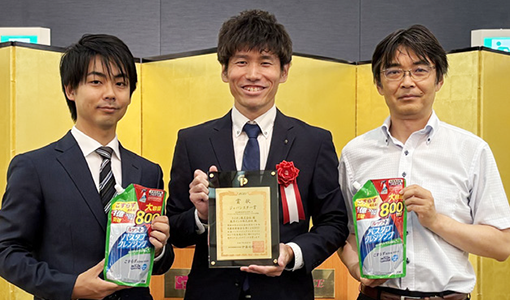
Lion Corporation has been considerably reducing its plastic consumption by changing the containers and packages used for its detergents, fabric softeners and other products from bottles to refill pouches as part of its environmental response measures. However, refill pouches are manufactured by laminating different plastic materials to ensure the desired performance. This makes them difficult to recycle.
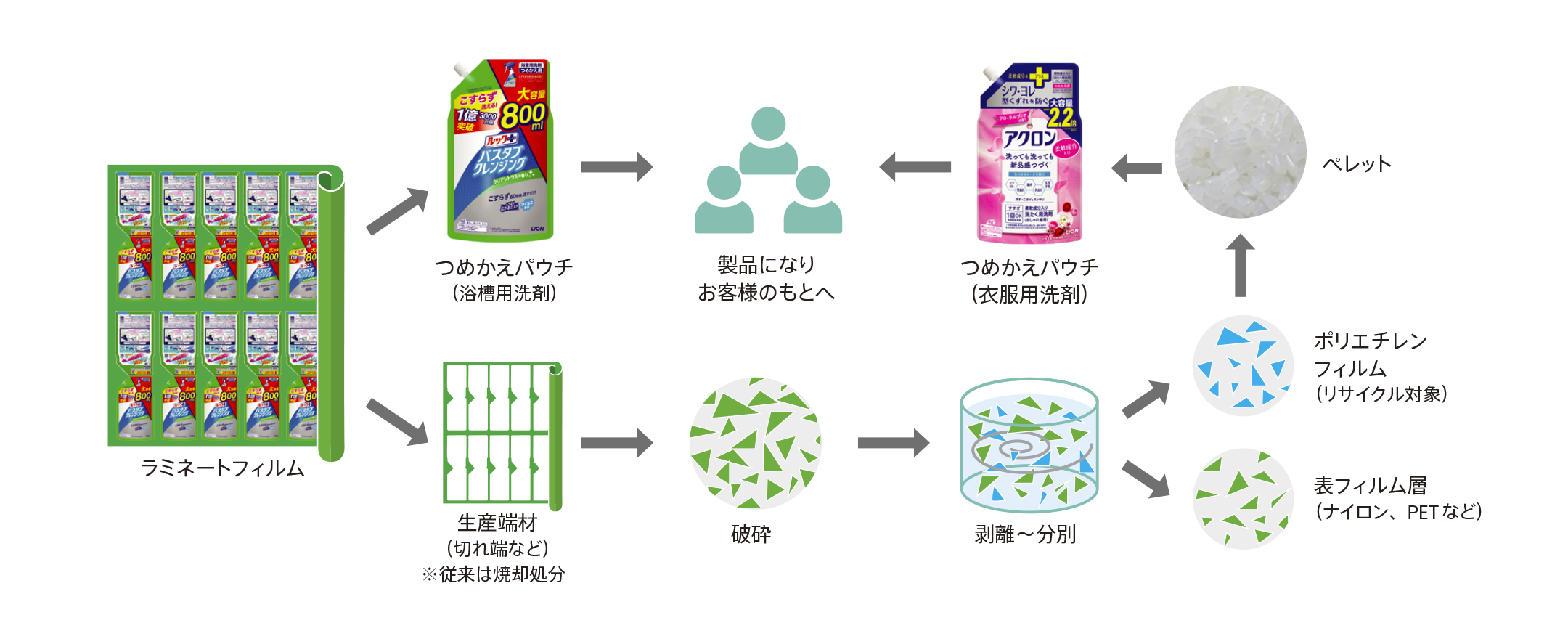
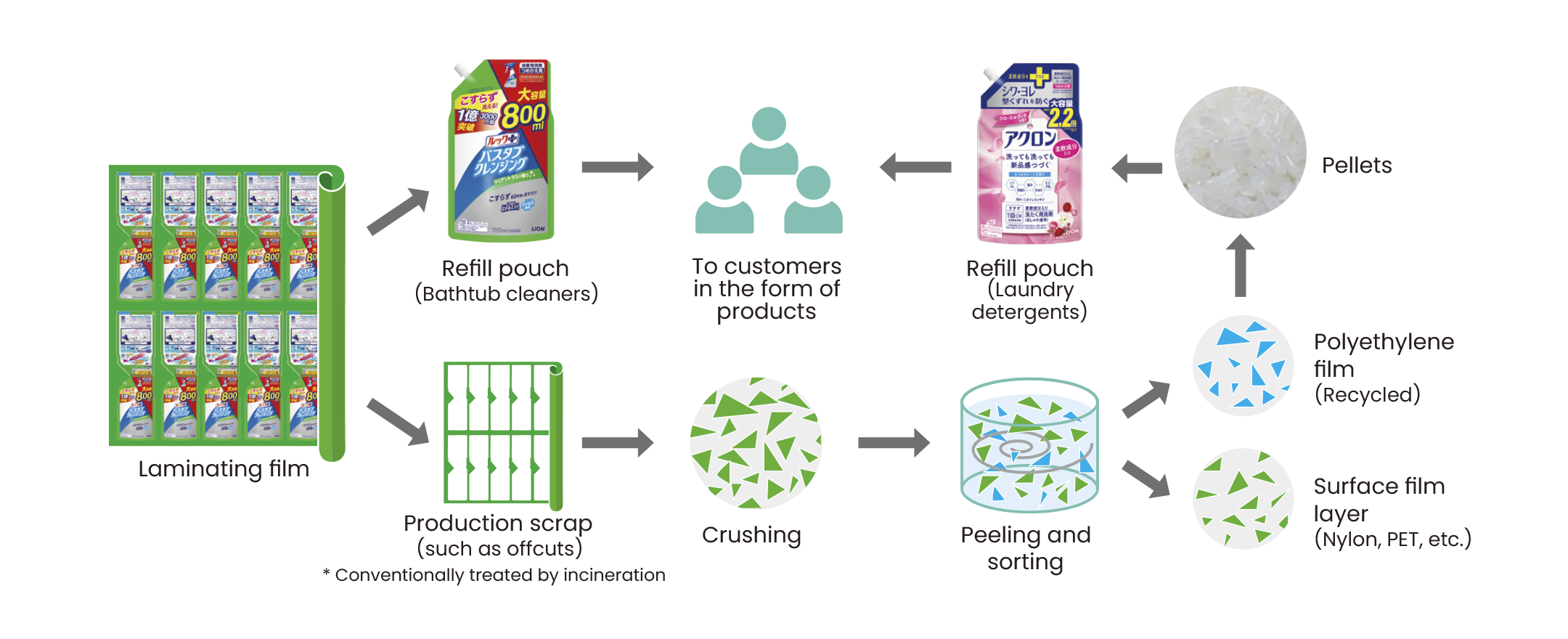
Our encountering the peeling and deinking technologies possessed by Toyo Ink Co., Ltd. was a turning point. Using these technologies, we were able to release a recyclable pouch for our LOOK Plus Bathtub Cleansing household cleaner in 2024. This product won various awards in Japan and overseas in recognition of its potential to contribute to the environment. In addition, in 2026, we established a circular scheme in which production scrap of this product is peeled and selectively recycled into polyethylene, which is manufactured into the refill pouches used for ACRON laundry detergents for delicates.
We will continue to accelerate our collaboration with Toyo Ink Co., Ltd. and other stakeholders with a view toward expanding our plastic recycling using these technologies.
Share


