
What is an environmentally friendly roll label?
How can roll labels help reduce your CO 2 emissions?
This website uses automated machine translation. Please note that translations may not be fully accurate and may differ from the original Japanese text.
- What is a roll label?
- Advantages of roll labels
- CO 2 emissions/performance comparison
- Product introduction
What is a roll label?
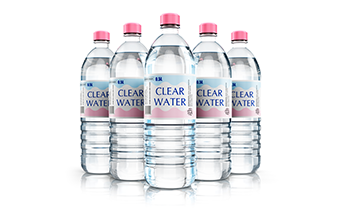
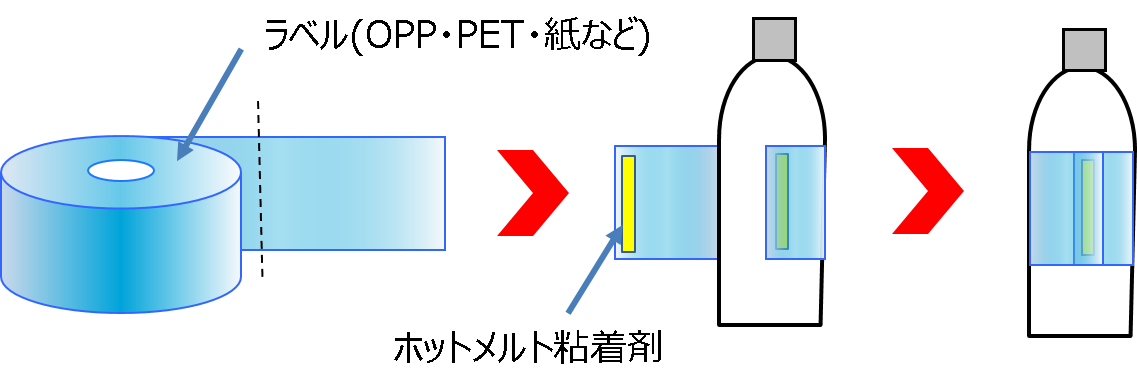
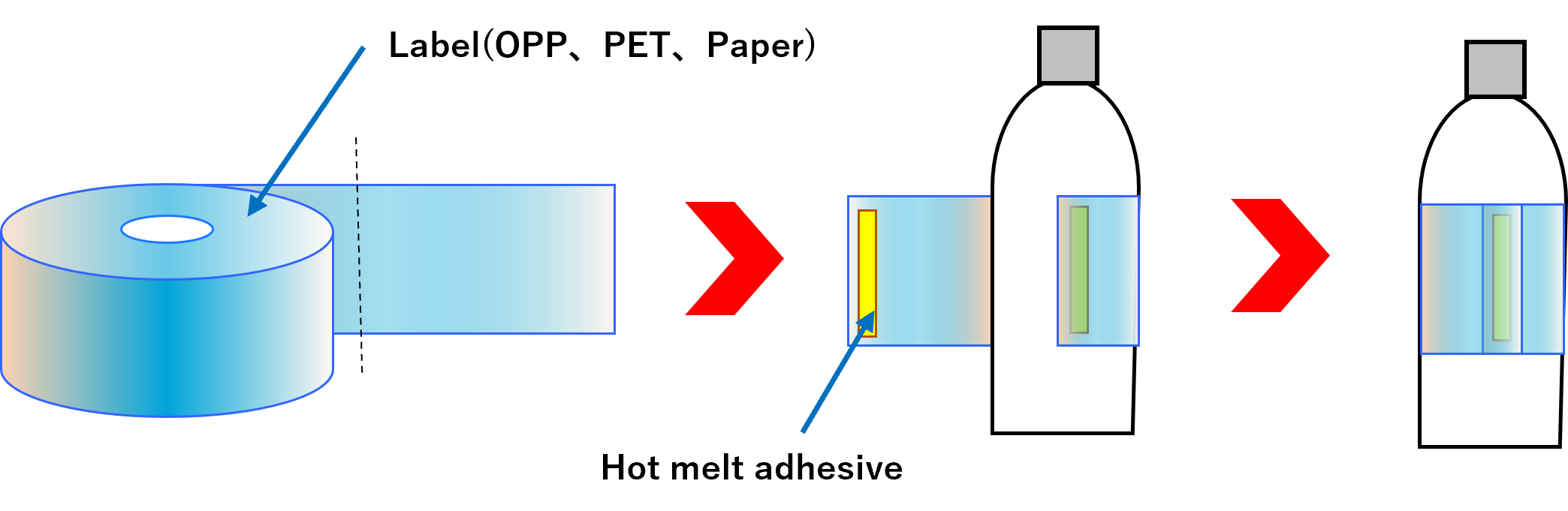
A roll label is coated with hot-melt adhesive on both ends and wrapped around a container.
The adhesive is melted in a dedicated labeling machine and applied inline during the labeling process.
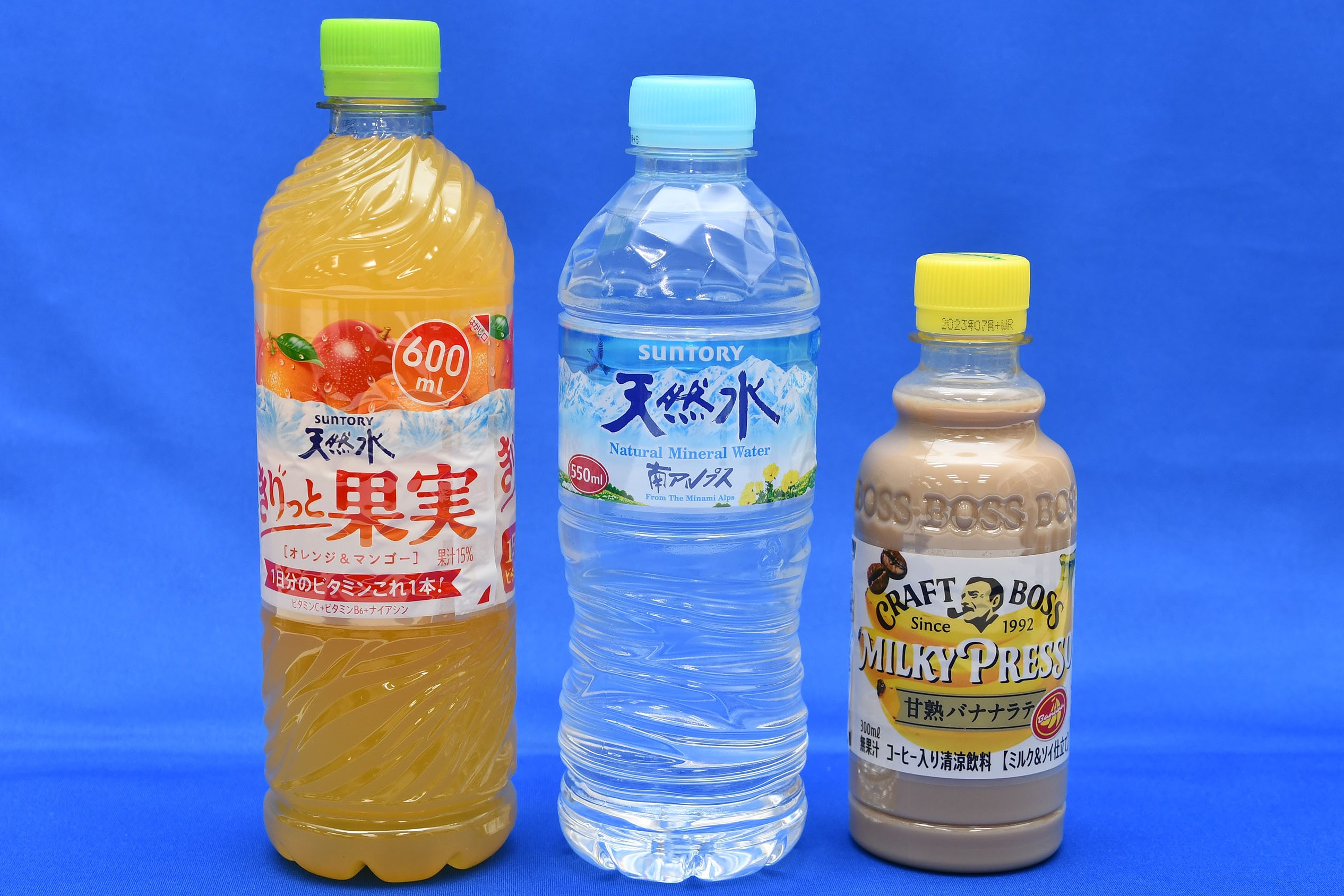
Roll label products (PET bottles)
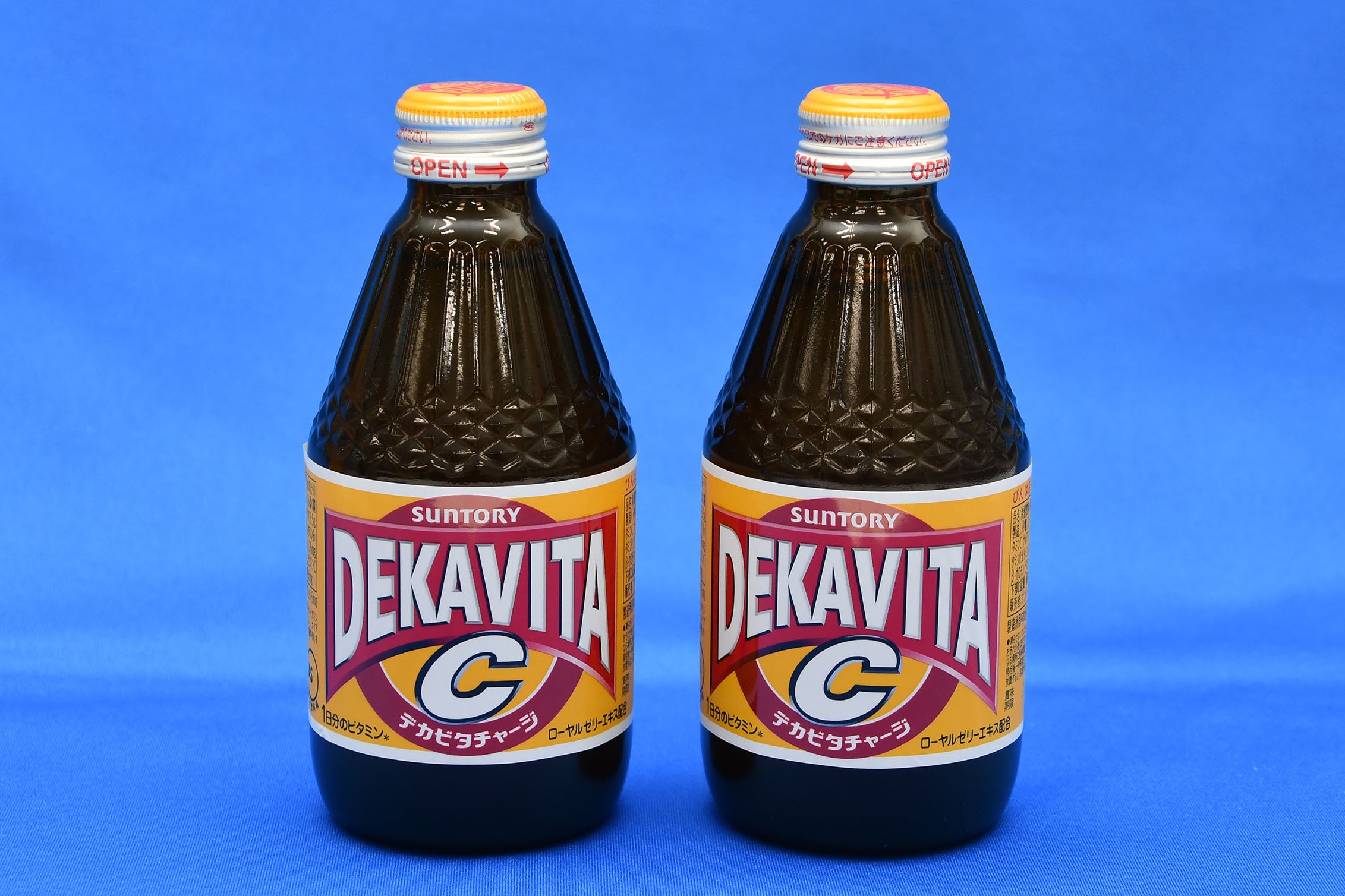
Roll label products (Glass bottles)
Other common labels
| adhesive labels | The most common label. There are two types: solvent-based and water-based. Paste while peeling off the release paper. It can be easily applied to substrates, and the labeler is inexpensive and easy to use. |
|---|---|
| shrink labels | Used in perforated PET bottle drinks, etc. After a cylindrical label is placed on a bottle, it is heated with water vapor to shrink the label and wrap it around the container. Can be used with irregularly shaped containers and has excellent design. |
| glue labels | Used on beer bottle labels, etc. A label that is attached to a paper label by applying glue dissolved in water. There is less waste and the glue is relatively inexpensive. |
Advantages of roll labels
Conventionally, labels have prioritized design and visibility as the face of the product, requiring them to be large, easy to read, and securely adhered to containers.
In recent years, however, environmental considerations have begun to reshape these requirements, and roll labels provide benefits in terms of reducing environmental impact..
New functions required for labels
Sustainability
- Lower CO₂ emissions during production
Recyclability
- Easy label removal for improved recyclability
- Reduced label size
- Linerless solutions (no release liner required)
Cost Efficiency
- Thinner label design to reduce material usage
CO2 emissions and performance comparison by label
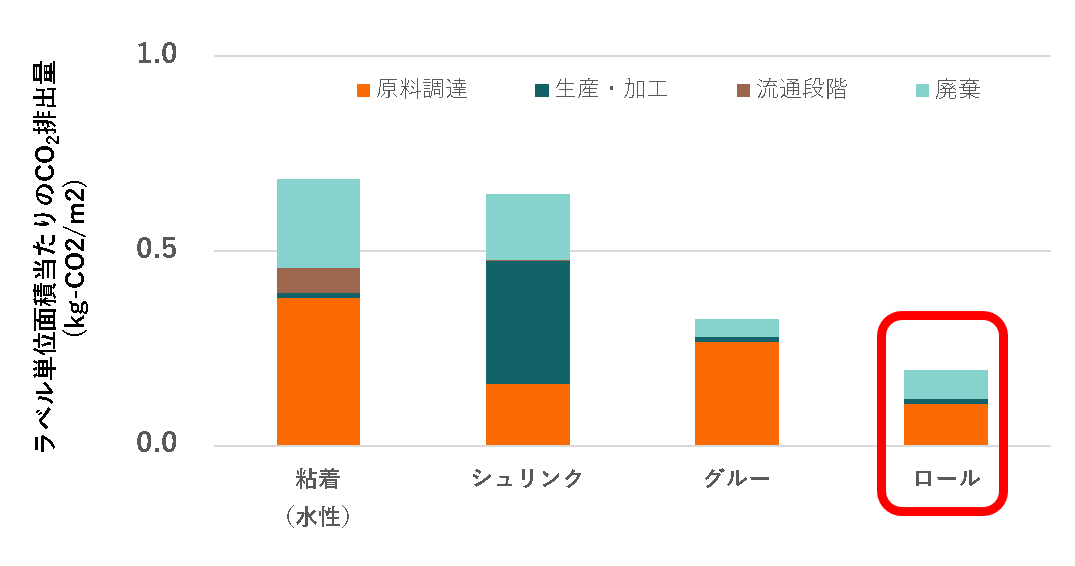
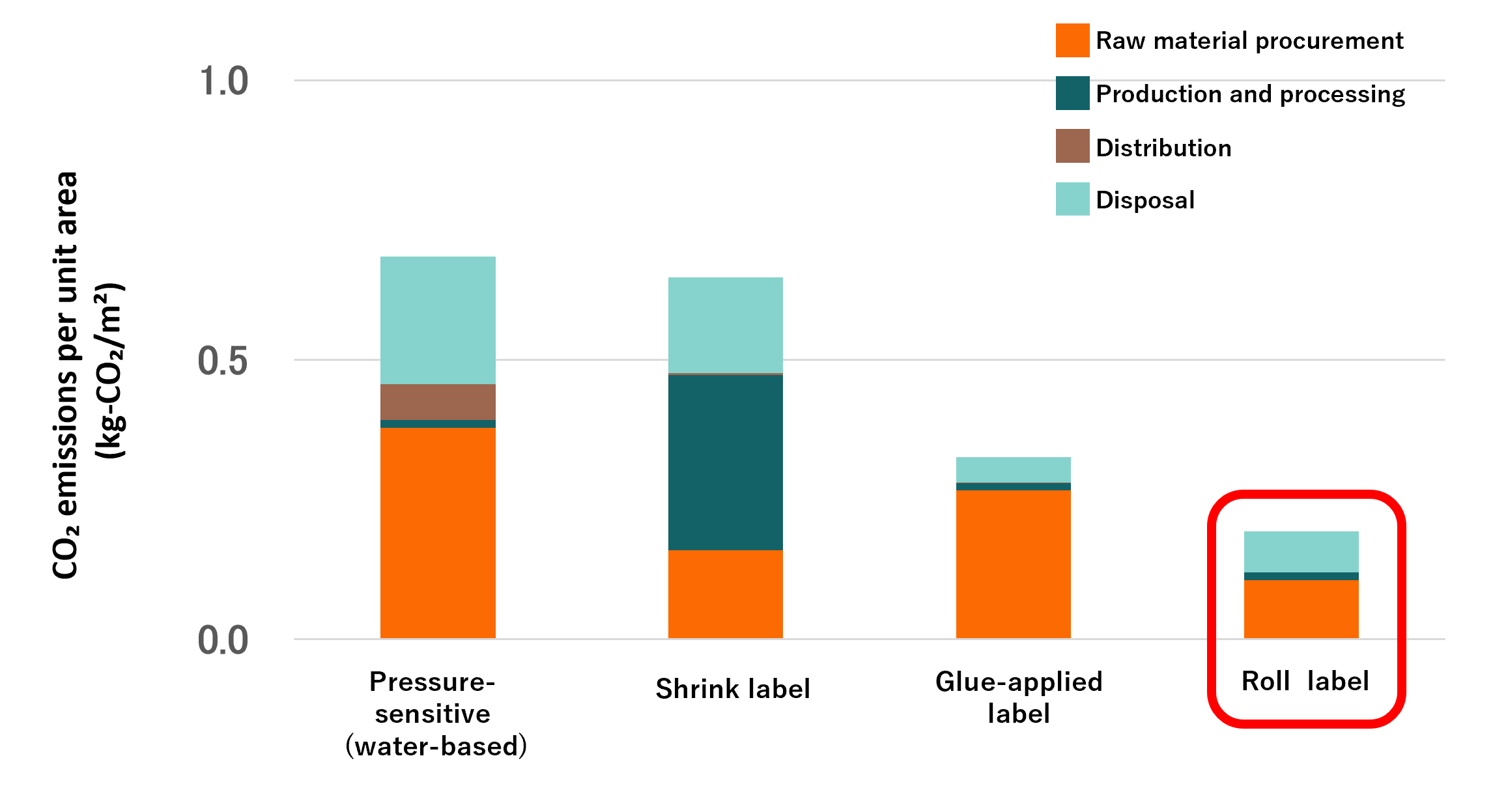
CO2 emissions for each label type were calculated using CFP (Carbon Footprint of Products). The results indicate that roll labels have a lower CFP than other label types. This is because roll labels enable thinner constructions and eliminate the need for release liners, thereby reducing CO₂ emissions..
CO2 emissions by label (CO2 emissions per unit area)
| Label | Adhesives | Others | |
|---|---|---|---|
| pressure sensitive adhesives (water-based) label |
Paper label (basis weight 85g/㎡) |
Dry: 20g/㎡ Acrylic (NV: 60%) |
Process paper (basis weight 300/m2, used 10 times) |
| shrink labels | PS40μm (shrinkage 20%) | none | Steam 470kg/hour, tunnel 5m |
| glue labels | Paper label (basis weight 85g/㎡) | Dry: 20g/㎡ water-based vinyl acetate (NV: 50%) |
|
| roll label | PET label (20μm) | Application amount: 4.8g/㎡ | hot melts biomass content: 40% |
* TOYOCHEM Co., Ltd. Estimate. Assuming a label area of 20 cm × 5 cm and a production speed of 720 bpm.
Performance comparison by label
| adhesive labels | shrink labels | glue labels | roll label | ||
|---|---|---|---|---|---|
| Environment | CFP | × | × | △ | ◎ |
| Label | lots of paper labels Base material: 85g/m2 |
Dedicated OPP/PET label Approximately 40~60μm |
paper label Base material: 85g/m2 |
Many PET/OPP labels (about 12-30μm) Paper labels also available |
|
| release paper | Yes (about 100μm) | none | none | none | |
| recycling | Alkali | × | ◎ | × | ◎ |
| Hand removability | △ | ◎ | × | ◎ | |
| cost | × | △ | △ | ◎ | |
| Production capacity | △ | 〇 | ◎ | 〇 | |
| Workability | ◎ | 〇 | × | 〇 | |
hot melts product introduction for roll labels
Our company has a lot of experience in the hot melts pressure sensitive adhesives" LABELMELT ™ BL series" for roll labels.
Our unique formulation technology and new evaluation technology have achieved both adhesive strength and ease of peeling.
Click here for the introduction of the hot melts for roll labels "LABELMELT ™ BL Series"
Alkali-soluble LABELMELT™ BL Series
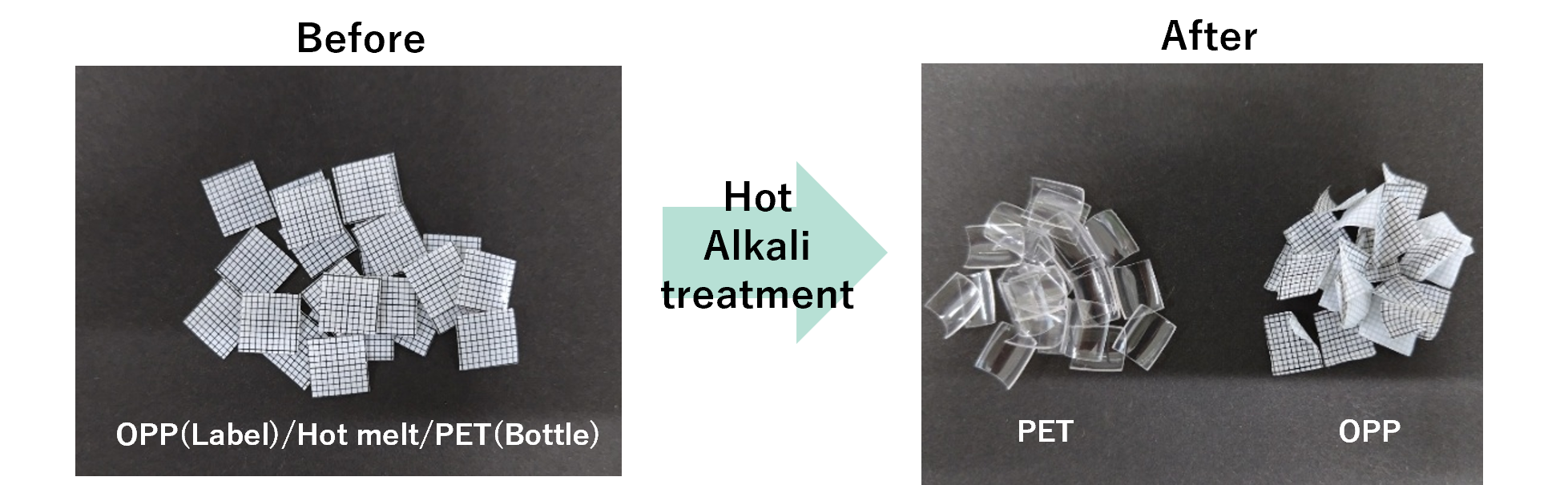
Our "LABELMELT® Series" is a label adhesive that ensures reliable bonding performance on PET bottles through our proprietary compounding technology and innovative evaluation methods, while simultaneously achieving alkali-based peelability. Beyond the manufacturing cost reduction and CO₂ emission reduction benefits offered by roll labels, our product's alkali-based peeling capability enables easy separation of containers and labels, facilitating the bottle recycling process without obstruction and contributing to a circular economy.
Furthermore, we offer an extensive product lineup, enabling us to propose optimal solutions tailored to specific performance requirements and existing equipment configurations.
Inquiries
TOYOCHEM CO., LTD. Packaging and Industrial Materials Sales Division Address Sales Department
TEL: +81-3-3272-3497