
Integrated Report 2026 Top Message
Published on June 30, 2026
This page has been translated using AI.
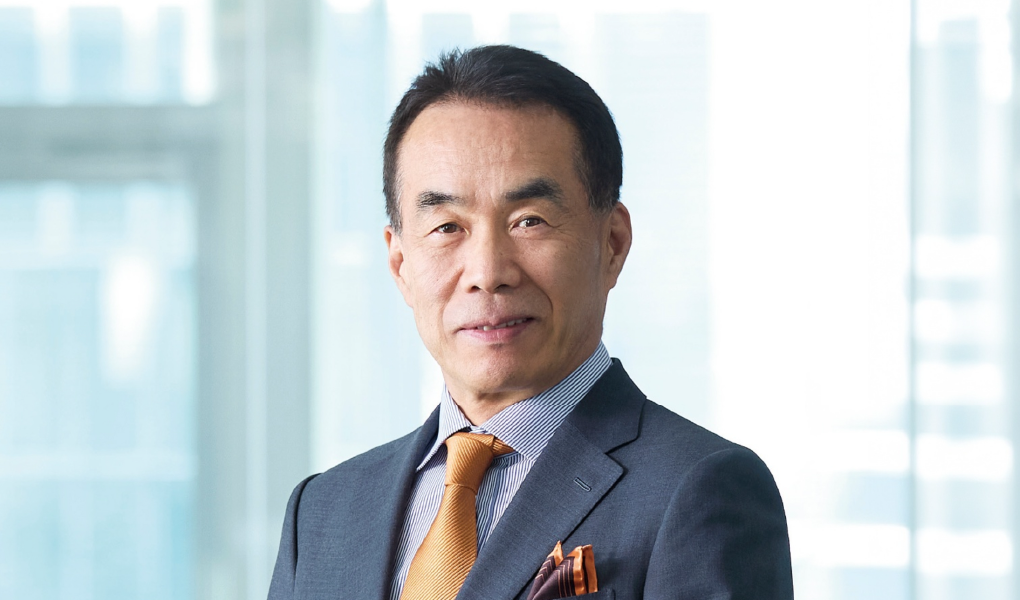
Satoru Takashima
A corporate position tested in a turbulent world
Looking back at FY2025 and looking toward FY2026 and further into the future, I realize how violent changes in our environment have been. In addition to the increase in geopolitical risks, AI and other technologies are advancing. The number of consumers and the working population are shrinking in Japan, and new issues are emerging regarding the sustainability of the environment, society and other matters. Business conditions are changing dramatically. None of these things are temporary. We need to assume that they will be lasting issues when thinking about management.
In particular, the current geopolitical risks related to the Middle East are unpredictable. Immediately after armed conflict began in Iran at the end of this past February, our management executives gathered to discuss our response actions. At that time, we agreed that decisions would be left to individual sites, assuming that something on the level of an emergency was happening, and we agreed to thoroughly share information. We have shared the information gathered from bases around the world among individual companies and divisions and taken the best possible measures based on decisions made at the individual sites. In March and April, the procurement of raw materials was the greatest issue. Coordination with suppliers and trading companies and emergency imports from overseas bases within the Group were conducted at the discretion of individual sites. This enabled us to supply our products without causing our customers any problems. Since then, we have been working to maintain and improve our performance by changing products and their prices based on the raw materials available while seeking the understanding and cooperation of customers. I feel that we have steadily increased our resilience and ability to act quickly and appropriately through the structural and corporate transformation we have implemented to adapt to past changes in the environment surrounding us, such as the COVID-19 pandemic and the situation in Ukraine.
One of our strengths is the business infrastructure we possess in many different countries and regions around the world. We share information through our global network and serve customers sincerely to provide them with peace of mind. Related divisions work hand-in-hand to do their best. In addition to the transformation of mechanisms, we will persistently pursue these mindsets to turn challenges into future opportunities.
Regarding the continuing tensions between the United States and China, we are in a difficult situation in which we must distribute risks to India and other growing areas while maintaining and expanding our operations in the two countries, as they are both important markets to us. Eiichi Shibusawa said, “Goodwill in economic relations between ourselves and others will in time become political goodwill, and thus international peace shall be preserved.” This was included in a collection of “Kungenshu (Maxims),” and I strongly agree with this idea. I believe that one of our roles as a company is to create peace. Businesspeople can visit foreign locations in person to meet local people directly and deepen friendships with them that overcome prejudice. I am convinced that maintaining economic relationships and increasing mutual understanding will help prevent confrontations, even as international tensions mount.
artience2027, Medium-term Management Plan — Steadily building up earning strength in its second year
FY2025 was the second year of the artience2027/2030 “GROWTH” Management Plan in which goals for 2030 were set. In the course of the business portfolio transformation toward growth, net sales decreased slightly from the previous fiscal year. But, disregarding foreign exchange impacts, net sales effectively improved. Operating profit hit a new high. Our overall earning strength is steadily improving.
Under the artience2027 medium-term management plan, the first of the basic policies supporting the growth strategy is the “shift to highly-profitable existing businesses.” We divided our existing businesses into those that should be expanded and those that should be restructured, and we made different efforts for both of these groups and achieved the stable growth of profit. In overseas markets, sales of pressure-sensitive adhesives and liquid inks expanded. In Japan, profits from liquid inks were stable. For pigments, we carried out structural reforms and their sales improved. I feel that we are seeing tangible results.
The second basic policy is the “creation of strategic priority businesses.” Accordingly, we worked with a focus on mobility and batteries and on displays and advanced electronics. In mobility and batteries, operations concerning carbon nanotube (CNT) dispersions for lithium-ion batteries (LiB) were affected by the sluggish electric vehicle (EV) market. Our plants in Kentucky, USA and in Hungary posted major impairment losses, which resulted in a decline in profit. Our major customers have successively revised and postponed their investment plans. In view of these industry-wide changes, our position was that it would be appropriate to reconsider our plan. After careful discussions with a certified public accountant, we have ensured our financial statements properly reflect these matters.
Meanwhile, multiple projects were created in the domain of displays and advanced electronics, centered on semiconductors. These buds of businesses have been developed to establish a firm foundation for growth. Sales of optical pressure-sensitive adhesives for securing displays grew in China and elsewhere. In the market for image sensors used in smartphones and in-vehicle cameras, our color filter materials have an increasing presence. In addition, amid the data center construction boom, mainly in the United States, polymers are increasingly used for circuit boards. We expect to see them continue to grow in the future.
Increasing investments for growth to carry through with the business portfolio transformation
Japan escaped 30 years of deflation and moved into an era of inflation. I see this as a major turning point in corporate management. In an environment where retaining funds is a risk, the speed and precision of growth investments are decisive factors in our fate in the coming years.
Recognizing this, we will prioritize growth investments in our allocation of our cash flows with a view toward the achievement of the artience2027/2030 “GROWTH” Management Plan. Shareholder return is another important duty that we have, but our priority is ensuring that we grow in the future.
Regarding investment destinations, we will focus on the aforementioned area of advanced electronics, in addition to strengthening our existing businesses. We anticipate that it will be a key growth driver during the period of artience2030, our next medium-term management plan that commences in FY2027. We will carry out proactive initiatives, including mergers and acquisitions, as necessary.
At the same time, we will not allow the CNT dispersion business to move backwards. The EV market is currently in an adjustment phase. Amid rapid advancements in autonomous driving and other mobility technologies, we project steady progress in the transition to EVs in light of its affinity with digital technologies. While monitoring the timing of the expansion of the EV market, we will expand the scope of our business to include anode materials and all-solid-state batteries. We will also expand from automotive applications to applications in the fields of stationary storage batteries for data centers and physical AI power supplies, which are expected to expand in the future. We will develop this business into a pillar of growth.
Another domain we believe has great potential as a next-generation area is the field of bioscience and life sciences. We will capitalize on our polymer technologies and our strength in fluorescent materials with the goal of entering the field of in-vitro diagnostic agents. Many conventional test drugs have been made from animal-derived raw materials, and there are supply and quality stability issues in this area. The need to switch to chemical products is increasing. In July 2025, we formed a business alliance with Immuno-Biological Laboratories, Co., Ltd. (IBL), a manufacturer of antibodies. Through this alliance, test drugs using our synthetic polymers have been released. We also invested in U.S.-based biotech venture VLP Therapeutics, and we have dispatched engineers to it to work on the development of vaccines. These actions are beginning to produce positive results. We are engaged in in-depth evaluations to increase our emphasis on this domain during the next medium-term management plan.
We must also accelerate our decision-making process regarding poor profitability businesses. We ask businesses failing to improve their cash flows over a predetermined period to create recovery plans. If there is no potential for the business to recover, we need to make decisions, including decisions regarding withdrawal from the business. We will develop rules regarding these decisions to accelerate our business portfolio transformation.
Ensuring to increase capital efficiency to advance business management
Increasing capital efficiency is a top management priority. In the artience2027 medium-term management plan, a target return on equity (ROE) of 8% was set. We see this as the minimum level we must achieve to exceed a price-to-book-value ratio (PBR) of 1. In FY2025, we failed to achieve the ROE target due to the posting of an impairment loss. However, there were no problems regarding our cash flows. We will make sure that we will achieve our targets for FY2026, the final fiscal year of the artience2027 plan.
To realize this, we will further strengthen the Group’s management structure. In the past, our management of progress and performance has centered on net sales and operating profit. In the future, we will also include profit attributable to owners of parent. We will ensure that reports prepared by the financial section include profit attributable to owners of parent, so that we are able to monitor it continuously. This will enable us to transition to management that pays close attention to the bottom line.
We are working to fully leverage cash conversion cycle (CCC) and return on invested capital (ROIC) as indicators of capital efficiency. We set ROIC targets for individual segments, and we also set more detailed targets for individual product categories, and we check these figures every month.
From FY2026, officer remuneration is more closely linked to performance. In addition to traditional net sales and operating profit, we have incorporated ROE into the index to evaluate performance, and we have widened the range that performance-based compensation fluctuates within. This will enable us to fulfill our management responsibilities from a perspective that is more aligned with the perspectives of our shareholders.
Increasing the power of individuals based on people-oriented management
The third basic policy in artience2027 is the “reforming of business foundation.” Our human capital strategy is at the heart of this. Even as we are working on reforms with a determination to change everything within the company, we are keeping our “people-oriented management” principle unchanged because we believe that maximizing the capabilities of diverse individuals is the essence of corporate growth.
In the area of digital transformation, which we are focused on, we are striving to create an environment that enables our internal staff to engage in personal development, rather than relying solely on the acquisition of external specialists. A symbol of these efforts is our Generative AI Task Force, a trans-divisional team whose members include people from production, sales and back-office departments. We are seeing the emergence of a series of employees who are taking the initiative in personal development activities with a strong sense of purpose and are changing operations, and I find this encouraging. In the R&D division, we are using AI to develop products, and we have already started to develop AI agents.
The mission of the Incubation Center is to develop an organizational culture that facilitates people’s taking on challenges and the creation of new businesses. Its initiatives are beginning to produce positive results. The Incubation Center organizes the IPPO internal business idea contests. IPPO, which means “first step” in Japanese, is derived from its slogan, “Take the first step with courage.” Each time a contest is held, it attracts more applicants than the previous contest. The applicants vary widely in age, ranging from their twenties to their sixties. External consultants are involved in the process of intensively improving their ideas in terms of business feasibility and revenue models. This process helps achieve personnel development and the creation of new businesses. The energy-saving solution that won the grand prize in FY2024 is already in the commercialization phase. There are hopes that a project being implemented in collaboration with a university-originated business venture that possesses an electric power sensor technology will develop into a consulting business for the AI-based remote management of the power consumption of factories that makes it possible to propose energy conservation measures. In October 2025, we launched Incubation CANVAS TOKYO, a global co-creation hub specializing in materials. It is a place where personnel, technologies and ideas can come together to accelerate the creation of new value.
We have also worked hard to increase employee engagement by engaging in a dialogue with them. To date, I have visited 29 bases in Japan and abroad to hold roundtable talks with a total of approximately 300 employees. The number of participants in each of these roundtable talks is limited to focus on listening to the personal opinions of employees. In FY2026 in particular, I emphasized manufacturing workers and discussions suited to the issues that individual bases are facing in consideration of the results of the engagement survey.
Direct conversations with employees significantly impact the management decisions that I make. At one plant, an employee said that the plant staff were concerned about the slow approval of their applications for the replacement of equipment, even though their equipment was becoming older and older. Directly listening to the worker highlighted the fact that we were not making the necessary investment in existing equipment as we were pushing ahead with major growth investments, and it enabled me to realize the problem. In response, we reviewed investment limits in the management plan and ensured that we could flexibly invest in equipment maintenance and replacement within depreciation limits. I understand that investing capital to reduce the burdens borne by workers is also necessary from the perspective of addressing the intensifying labor shortage in Japan.
Placing sustainability at the heart of management to facilitate the continual growth of corporate value

We have consistently believed that environmental initiatives are both responsibilities that manufacturers must naturally meet and also business opportunities. The need for environmental products and technologies continues to increase. In our asv2050/2030 Sustainability Vision, we set the target of increasing our sustainability-enhancing product sales ratio to 80% by FY2030 and to 100% by FY2050. The progress we achieved in FY2025 includes the commercialization of sustainable packages that feature enhanced recyclability in collaboration with Lion Corporation.
Currently, there is a backlash against ESG and the SDGs, but long term, companies that do not consider the environment or society will not be chosen. This trend is more obvious among the members of younger generations who have been educated about sustainability. When speaking with employees in Japan and overseas, I have heard many times that they chose to join artience because they found artience’s environmentally considerate management and product development to be appealing. In the future, the people who are members of these generations will play central roles in society. In view of this, I have an awareness of the necessity of sustainability management.
It is also necessary to improve governance to continuously increase corporate value. In FY2025, a female outside director who has experience in corporate management joined us, further improving our knowledge in the areas of management, financial affairs and accounting. Regarding the composition of the Board of Directors, we will improve our skills matrix from the perspectives of diversity and specializations to improve the management team’s ability to fulfill its supervisory duties.
The Advisory Committee on Appointment and Remuneration continues to deliberate our succession plans for selecting future management executives. We will create candidate shortlists and provide the candidates with opportunities to deliver presentations during the committee’s meeting to assess their aptitude from multiple perspectives.
Continuing to work for the future based on 130 years of history
The artience Group celebrated the 130th anniversary of its foundation in 2026. While the Group’s long history is a testament to our sustainability, we are currently working to break out of the mold we have created for ourselves as a long-established company.
In FY2024, we changed the name of our company, and we also changed our philosophy system. We created our Brand Promise, “Creating value that resonates with the senses, build a future where all people can live enriched lives.” It has been two full years since we did that. We are achieving steady progress in our transformation and steady results in our processes to establish a culture that encourages us to take on challenges and transform our business portfolio.
However, looking at our results, these efforts are still incomplete. We must achieve the numerical targets set in the medium-term management plan and earn a positive evaluation from the market in the form of a PBR of more than 1. Not just in our founding business of printing inks, but also in new areas, we will develop mainstay products that will earn global recognition. I think that we cannot say that we have changed until we achieve this.
Several days ago, something impressive occurred during an internal discussion. A young staff member thanked me for changing the name of the company to artience. They said they were encouraged to take on any challenge within the company. I realized that our workers clearly understand the direction we aspire to move in, and this was really encouraging.
Building on our 130 years of history, we will continue to take on new challenges for the future as a company that combines art, which resonates with people’s sensibilities and hearts, and science, which includes technical capabilities and functionality, to continuously create value that resonates with the senses.
Management Plan artience2027/2030 "GROWTH"
Share


