Biodiversity
This website uses automated machine translation. Please note that translations may not be fully accurate and may differ from the original Japanese text.
- Basic approach
- Promotion system
- Implementation of the LEAP approach based on the TNFD framework
- Achievements
Basic approach
artience group 's business activities rely on many natural capitals, including natural raw materials and water resources. To this end, we recognized the importance of biodiversity early on and established the Biodiversity Policy (established in May 2009 and revised in January 2024) to promote nature conservation activities, including biodiversity conservation, local afforestation activities, and river and lake cleanup activities.
In addition, in order to understand the impact of our business activities on biodiversity and reduce its impact, we are working to conserve biodiversity through the sustainable use of resources, the reduction of chemical emissions, and the provision of products that contribute to sustainability.
The artience Group (hereafter referred to as the “Group”) is committed to the realization of its sustainability vision, asv2050/2030: a set of medium- to long-term goals to contribute to the improvement of social sustainability and the global environment and achieve sustainable growth as a corporate group. In working to achieve this sustainability vision, the Group regards proactive efforts to conserve biodiversity that may be affected by its business activities as one of its key management issues, and aims to prevent the loss of biodiversity, and restore it.
- Procurement and conservation of resources
The Group pays care and consideration to biodiversity in the procurement of raw materials, materials, and energy, etc., and takes biodiversity initiatives into account when selecting suppliers. We will also strive to use biological resources sustainably. - Products, production activities
Our group strives to develop "sustainability-contributing products and services" that help realize a sustainable society, and through the provision and dissemination of these products, we contribute to the conservation of biodiversity. We will also strive to reduce CO2 and other greenhouse gas (GHG) emissions and waste generation during manufacturing. - Water-related initiatives
The Group works to ensure the appropriate use of water resources, such as by reforming production processes, and by recycling and utilizing water used in such processes. We actively engage in monitoring and initiatives to maintain and preserve water quality in the regions where we operate. - Initiatives to prevent atmospheric pollution
The Group actively engages in initiatives to reduce emissions of volatile chemical substances (VOCs) in manufacturing processes and works to minimize impact on biodiversity. These initiatives cover production processes not only for the Group’s own products, but also for those produced by customers. - Cooperation with local communities
The Group conducts in and supports community-based biodiversity conservation activities at its business sites, both in Japan and overseas, in cooperation with local governments and various other organizations. We also endeavor to communicate with society by announcing the results of these efforts. - Enlightenment and education
The Group conducts appropriate awareness-raising and educational activities for its officers, corporate advisors, and employees, in order to raise awareness and knowledge of biodiversity within the Group, and to promote the introduction of biodiversity conservation initiatives in all corporate activities, including management and business strategies.
Established in May 2009
Revised on January 1, 2024 (Resolved at Board of Directors on December 8, 2023)
Promotion system
We are promoting initiatives within the environmental management system.
Implementation of the LEAP approach based on the TNFD framework
In promoting biodiversity conservation activities, we have implemented the LEAP approach outlined in the TNFD framework to understand the Group's dependence on natural capital, its impact, risks and opportunities, and formulate a strategy. It covers all of the Group's businesses, and this time we evaluated the scope of direct operations.
Understanding our dependence on nature and our impact
Using the biodiversity management assessment tool "ENCORE (Exploring Natural Capital Opportunities, Risks and Exposure)", we evaluated the Group's dependence on nature and its impact on nature in the industrial subgroups of "Integrated Chemicals" and "Specialty Chemicals". The results showed that although the dependence on natural assets was generally low, the use of water, the use of terrestrial ecosystems, GHG emissions, air pollutants other than GHG, water pollutants, soil pollutants, and solid waste had a high impact on nature.
| Factors influencing nature | Sector: Material Industry Subgroup: Integrated Chemicals |
Sector: Material Industry Subgroup: Specialty Chemicals |
|---|---|---|
| Water use | Very High | high |
| Use of terrestrial ecosystems | high | high |
| GHG Emissions | - | high |
| Air pollutants other than GHGs | Moderate | high |
| Water Pollutants | high | high |
| Soil contaminants | high | high |
| Solid Waste | - | high |
Risks and Opportunities
In the life cycle of our business activities, from raw material procurement to disposal and recycling, the Group summarizes what kind of INPUT and OUTPUT are in contact with nature, and what affects biodiversity such as "deterioration of habitat and growth environment", "raw materials for satoji and mountains", "invasion of alien species", "exposure to chemical substances", and "global warming and climate change". Clarified risks to biodiversity.
As a result of analyzing the relationship between our business activities and biodiversity (risks and opportunities), we believe that risks such as land use, emissions into the atmosphere, emissions into water bodies, and waste have various impacts on biodiversity.
Regarding opportunities, ASV 2050/2030 has set a goal of increasing the sales ratio of sustainability-contributing products to 80% by 2030, expanding products that can contribute to reducing CO2 emissions from a life cycle perspective, and making all products sustainability-contributing products by 2050.
In addition, since the natural environment varies greatly depending on the location and cannot be measured by a single indicator, TNFD recommends that information disclosure focus on regional characteristics.
The Group evaluated 44 business sites in Japan and overseas and identified priority areas. In the future, we will implement risk management tailored to the region.
| Evaluation item | Assessment Tool | Evaluation indicators |
|---|---|---|
| The importance of biodiversity | WWF Biodiversity Risk Filter | Scape Physical Risk |
| Water Stress | Aqueduct Water Risk Atlas 4.0 | Baseline water stress |
| Significant potential dependencies and impacts | ENCORE Hotspots Terrestrial | Combined hotspots of natural capital depletion |
| The importance of biodiversity | Water Stress | Significant potential dependencies and impacts | ||||
|---|---|---|---|---|---|---|
| high | Noticeably higher | high | Noticeably higher | high | Noticeably higher | |
| Japan | 0 | 0 | 0 | 0 | 0 | 0 |
| Asia (excluding Japan) | 5 | 0 | 4 | 5 | 3 | 0 |
| Europe | 0 | 0 | 1 | 2 | 0 | 0 |
| North America/Central and South America | 0 | 0 | 2 | 0 | 0 | 0 |
strategy
In particular, one site in China and two sites in Thailand, India, and Europe were evaluated as "significantly risky" in terms of the water environment, so we will consider water risk as an important risk in business continuity and will take measures to address the water risk at the relevant business sites.
In addition, we will promote the provision of products and services that can contribute to solving global environmental issues as we work to expand the sales ratio of sustainability-contributing products to 80% of sales by 2030 and the reduction of CO2 emissions from a life cycle perspective, which is the goal of ASV 2050/2030.
Metrics and goals
Based on the concept of core indicators in the IUCN "Guidelines for Planning and Monitoring Corporate Biodiversity Performance" and the results of "Relationship between Business Activities and Biodiversity (Risks and Opportunities)", we grasp and manage the changes in the activity targets and KPIs that we have been working on to reduce environmental impact as biodiversity management indicators.
| Biodiversity Indicators | 2022 | 2023 | 2024 |
|---|---|---|---|
| Water Usage (1,000 m3) | 4,857 | 4,252 | 3,964 |
| Scope 1+2 (Global) (t-CO2) | - | 154,568 | 152,002 |
| Energy intensity (overseas) (L/t) | 164.1 | 156.5 | 157.5 |
| VOC emissions (domestic) (t) | 53.3 | 52.7 | 54.5 |
| Nitrogen oxide (NOx) emissions (t) | 94.9 | 67.1 | 65.7 |
| Sulfur oxide (SOx) emissions (t) | 13.2 | 14.8 | 17.0 |
| Soot and dust emissions (t) | 10.3 | 9.4 | 10. 1 |
| COD emissions (t) | 224.5 | 159.0 | 159.6 |
Achievements
Participation in organizations related to biodiversity
- Keidanren Biodiversity Initiative
- CLOMA (Clean Ocean Materials Alliance)
- 30by30 Alliance for Biodiversity
- Demonstration test of simple monitoring
Main biodiversity conservation activities
- Ecosystem surveys of company-owned forests and activities to preserve valuable species
(TOYOCHEM Co., Ltd. Kawagoe Factory) - Environmental beautification activities on Lake Biwa Day
(TOYO VISUAL SOLUTIONS Co., Ltd. Moriyama Factory) - Received the "Bureau of Economy, Trade and Industry Director's Encouragement Award" at the award for excellent greening factories.
Biodiversity event "Living Stories"
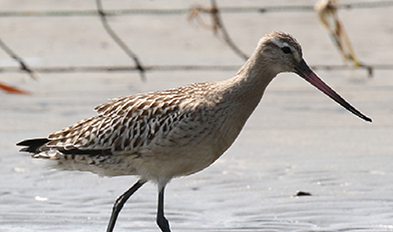
artience group We held a biodiversity event called "Living Stories" for everyone working in Japan to observe and report on familiar creatures. The period is August ~ September 2024 so that children and families can participate during the summer vacation, and photos and habitat information of creatures (fish, amphibians, reptiles, birds, mammals, insects, other arthropods, mollusks) found around their homes and on their travels were solicited and 60 reports were received. Although no rare creatures such as endangered species were identified in the report, it was an opportunity to raise awareness of biodiversity in familiar places.

Photographs of creatures that have been reported